Part Six of 8
The Town That Moved to the Train
Before the song and before the storm, there was a settlement called Cross Roads, about two miles south, with a store and a post office. In 1887 the St. Louis, Arkansas & Texas railroad came through on its way from Corsicana to Hillsboro, and Cross Roads did the sensible thing. It picked itself up, church and all, and moved to the tracks.
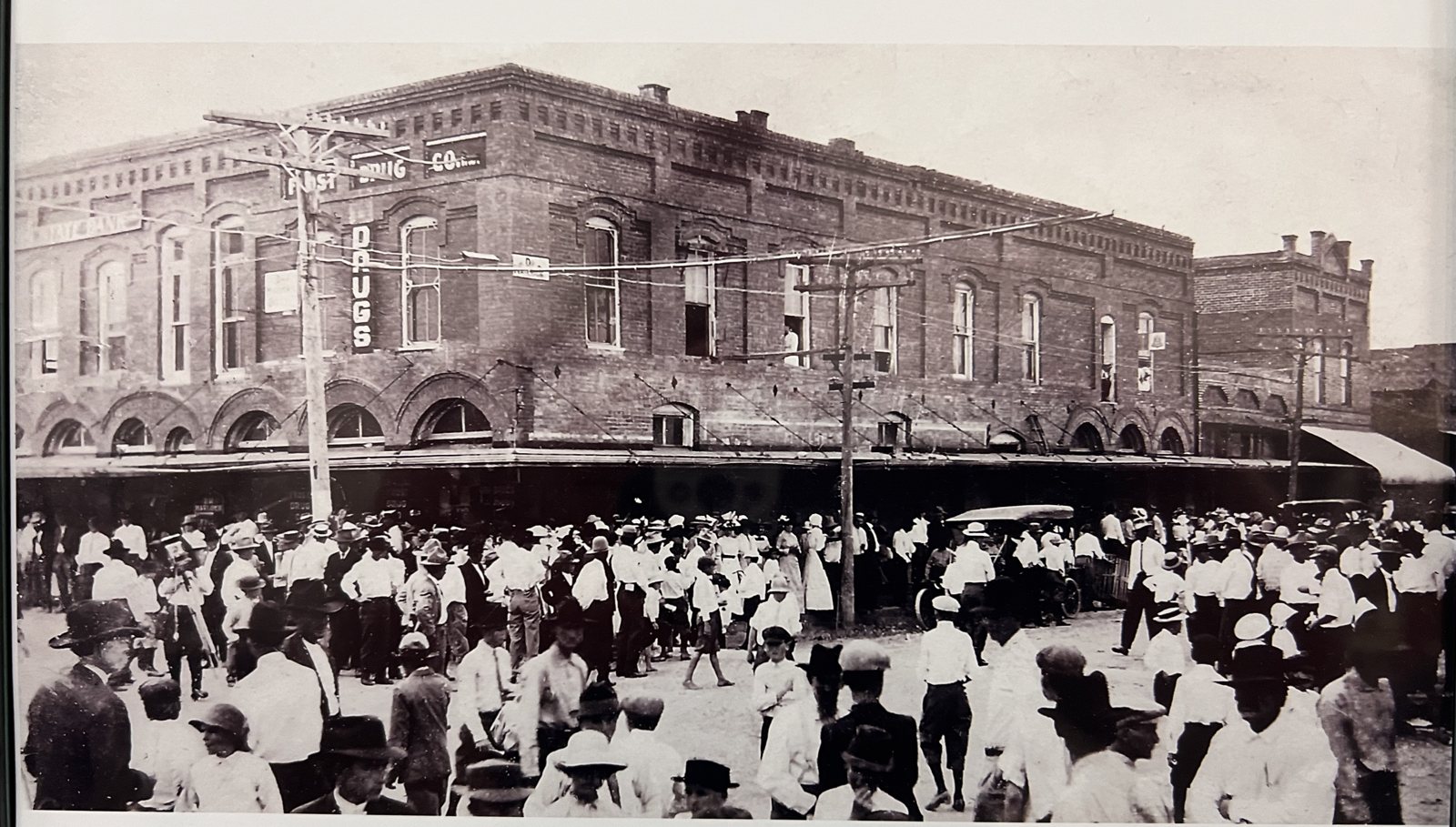
R. J. “Uncle Jack” Sanders gave the land. The new town took its name from Samuel R. Frost, a Corsicana lawyer and judge. So no, it isn't about the weather, though nobody here has stopped a joke from being made.
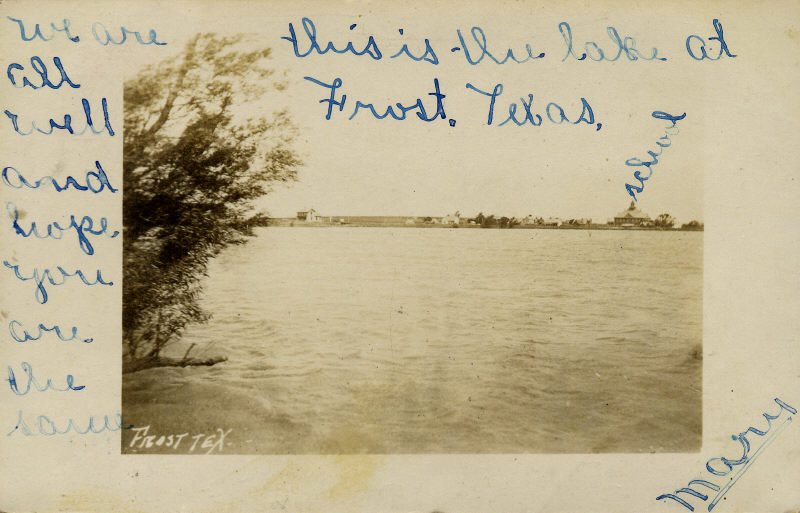
The railroad dug a lake to water its engines. By 1890 Frost had piped it into a waterworks, and a man named Wylie N. Jones had built a steamboat to run on it, said to be one of the few on an inland lake anywhere in Central Texas. Frost, in other words, had a navy.
Cotton did the rest. Six gins in season, an oil mill, seven groceries, three drugstores, two banks, and a new school in 1910 built on a $15,000 bond. The town grew from about 700 people in 1910 to more than 900 by 1920. On Trade Days you couldn't see the street for the hats.
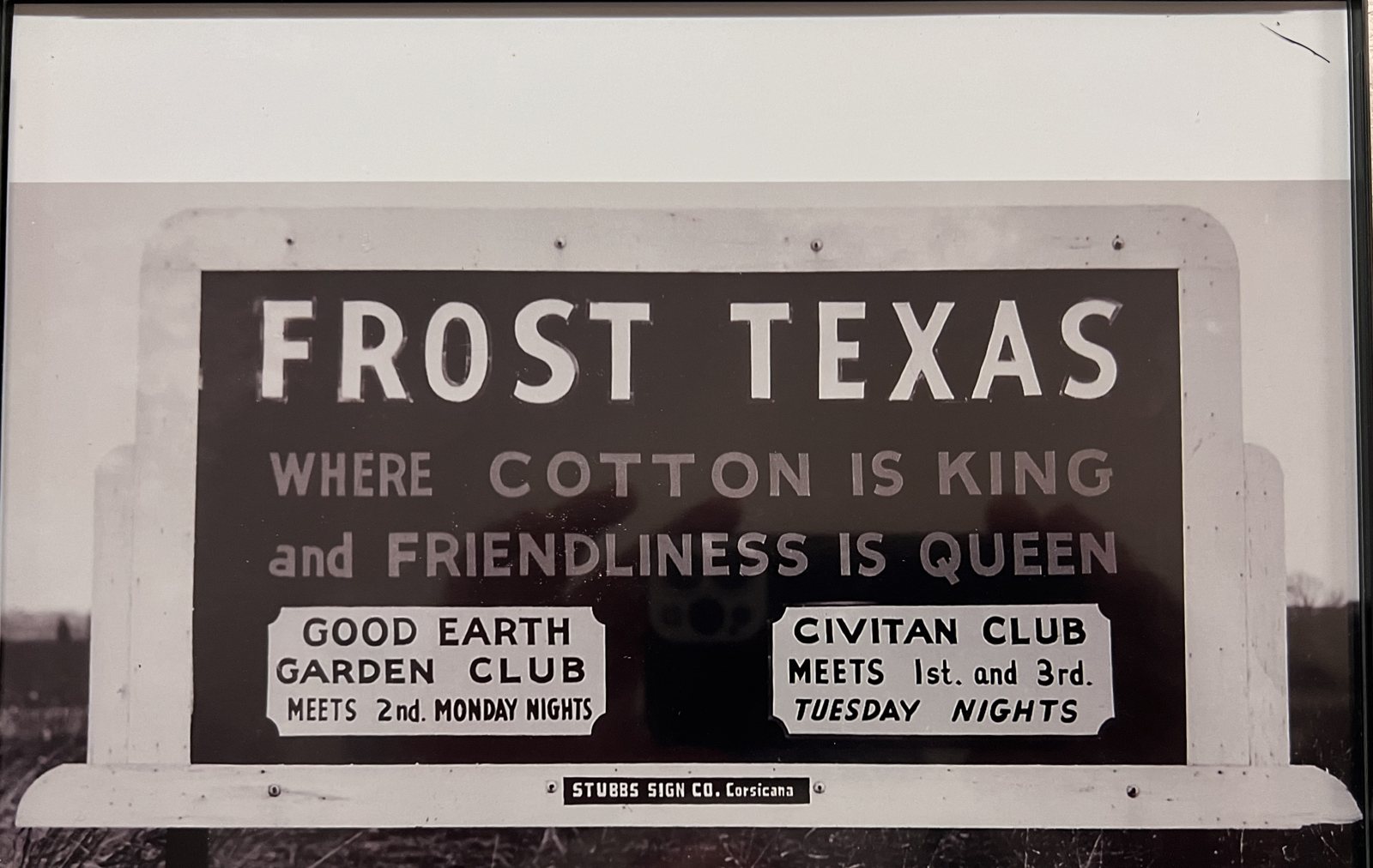
In 1951 the Good Earth Garden Club put up signs on Highway 22 with a slogan written by Mrs. Iva Jones. It still sums the place up about as well as anything: Where Cotton Is King and Friendliness Is Queen.
See Frost on the old fire-insurance maps.
Some things are built to endure.
Sources
- Cross Roads, the railroad, Sanders, 1887: Texas Historical Commission markers “Frost” (1987) and Frost Methodist Church (1990).
- Samuel R. Frost: Texas Historical Commission marker, Oakwood Cemetery, Corsicana (1984).
- Lake, waterworks, steamboat, gins, school bond: Warren, Navarro County Scroll, 1988; Handbook of Texas.
- Population: U.S. census. The sign: the Heritage Center print's own caption.