Part Three of 8
The Storm
First posted on the Frost, Texas Facebook Page, 12 June 2026 · on Facebook
It came on a Tuesday. May 6, 1930.
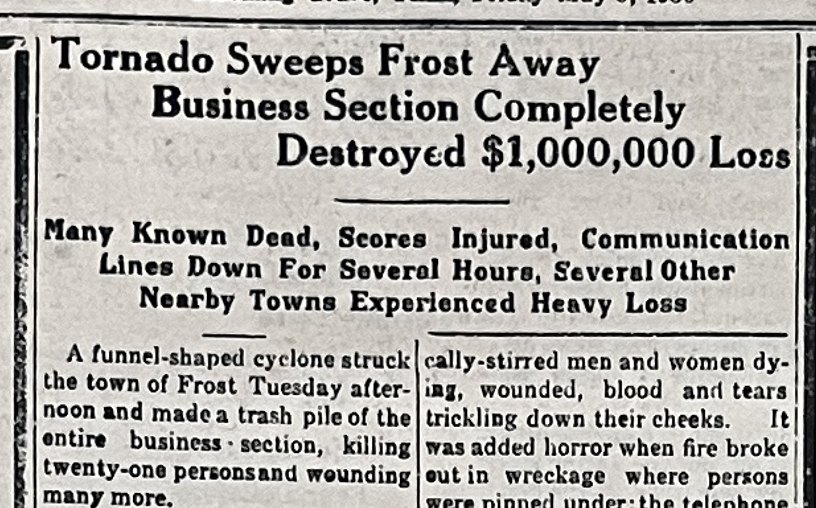
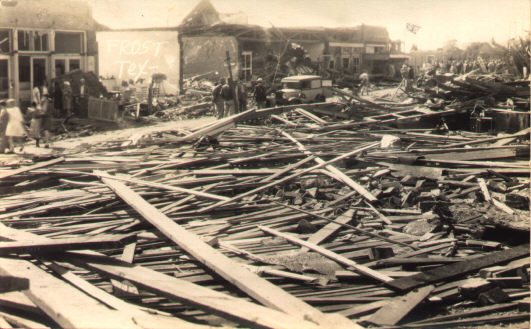
Late that afternoon a black funnel dropped out of the southwest and came down on Frost. In two or three minutes it was over — and so was the town. Homes, stores, the churches, the whole business district: gone. Twenty-two people in Frost did not see the next morning. More than fifty were hurt. It is still remembered as one of the worst days in Navarro County's history, and the storm, later rated an F4, still ranks among the ten deadliest tornadoes in Texas.
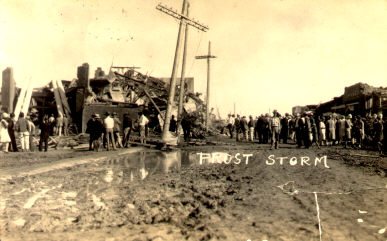
When the wind passed, the business district was gone. Stores, walls, roofs — nearly all of it. The Blooming Grove paper said the storm had made “a trash pile of the entire business section.”
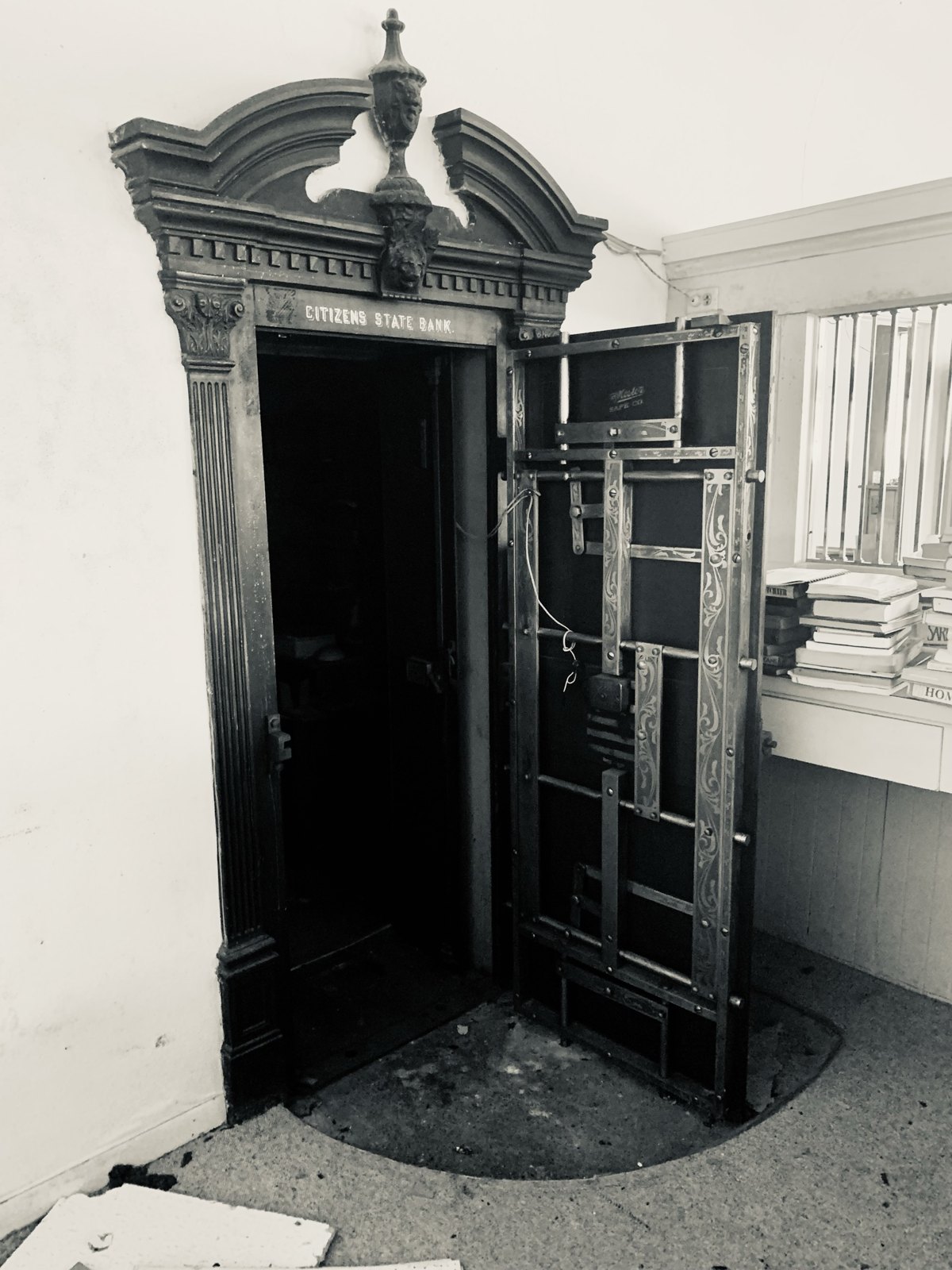
The people who lived through it remembered the same thing. As the sky went black, some ran for the one thing in town built to hold — the steel vault inside the Citizens State Bank on the corner of Garitty and Front. They crowded in. The building came down around them, walls and roof and all. When it was over, they climbed out into a town that no longer existed. But they were alive.
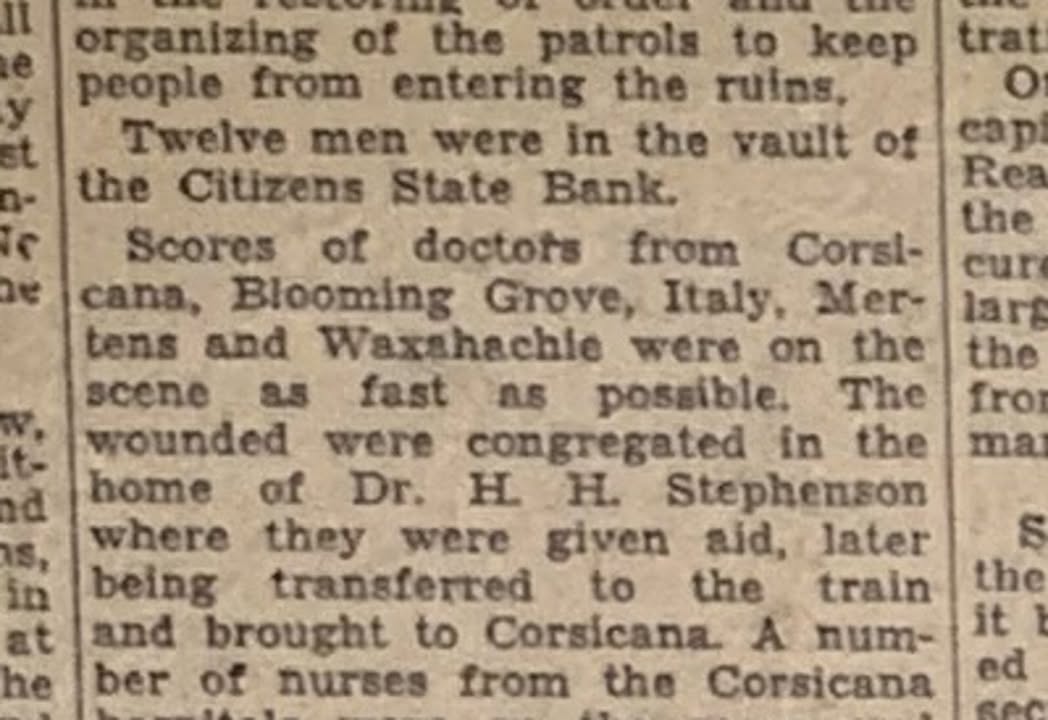
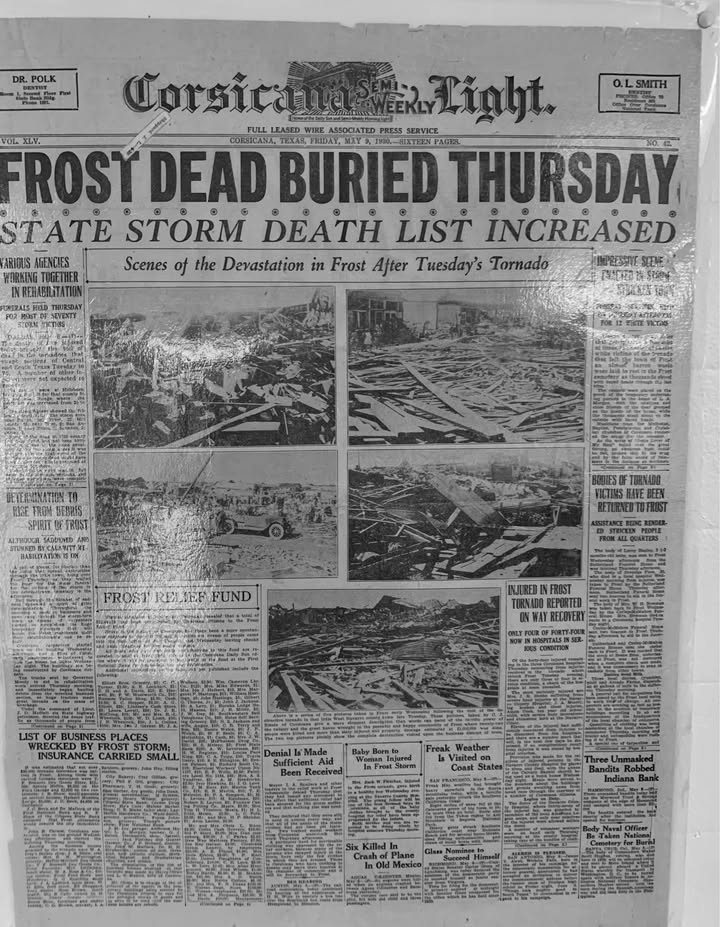
The Corsicana paper, two days later, set it down between the lists of the dead and the injured in a single plain line: “Twelve men were in the vault of the Citizens State Bank.”
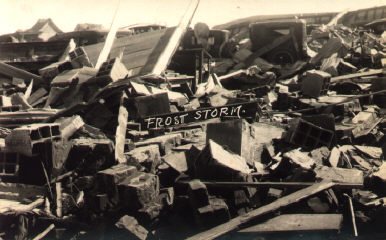
The vault held. So did the mosaic floor, already set in the ground when the walls fell around it. Everything else was rubble — and Frost rebuilt, on the same corner, around what was left. The vault is still there today. So is the floor.
It wasn't the only vault in town. More on that in Part Four.
Some things are built to endure.
Sources
- Date, time, rating and toll: Grazulis, Significant Tornadoes; Handbook of Texas.
- Ranking among Texas tornadoes: Texas A&M Office of the State Climatologist, 1930s severe weather (41 killed along the track).
- The vault: Corsicana Semi-Weekly Light, May 1930; Amarillo Globe, 7 May 1930 (“the two Frost banks”).
- “A trash pile of the entire business section”: The Blooming Grove Times, 9 May 1930.